If you’re searching for meaningful ways to explore the world’s most extraordinary ecosystems, this guide to global biodiversity hotspots is designed for you. Travelers today want more than sightseeing—they want immersive experiences, responsible trekking, and practical strategies that make each journey smoother and more impactful. This article brings together destination planning insights, cultural trekking perspectives, and smart on-the-go packing tips to help you experience these ecologically rich regions with confidence.
We’ve analyzed conservation research, reviewed travel data, and drawn from firsthand route planning experience to ensure the information here is accurate, relevant, and aligned with sustainable travel practices. You’ll discover where biodiversity is most concentrated, how to prepare efficiently, and what to consider to protect fragile environments while exploring them. Whether you’re planning a rainforest expedition, a mountain traverse, or a coastal wildlife journey, this guide equips you with clear, practical insights to travel smarter and tread lighter.
Ever stepped into a rainforest so loud it felt electric? I have, in Costa Rica’s Osa Peninsula, where scarlet macaws streak overhead and howler monkeys double as alarm clocks.
Travelers chase global biodiversity hotspots for that pulse of life, but the science can feel dense.
Here’s the simple shortlist:
• Amazon Basin – river safaris and pink dolphins.
• Madagascar – lemurs and baobabs.
• Coral Triangle – kaleidoscopic reefs.
Pro tip: travel with local guides; they’ll spot what you miss.
Plan shoulder seasons, pack light, and expect awe (it’s inevitable). Bring curiosity, patience, and sturdy boots. Trust the wild.
Understanding the “Hotspot”: What Makes a Region So Rich in Life?
Biodiversity simply means the variety of life—plants, animals, fungi, even microorganisms—woven together in one place. Think of Costa Rica’s Monteverde Cloud Forest, where orchids cling to misty branches and resplendent quetzals flash through the canopy. That layered richness is biodiversity in action.
However, not every lush landscape qualifies as a hotspot. Scientists use two strict criteria. First, the region must have a high number of endemic species—meaning they exist nowhere else on Earth (like Madagascar’s ring-tailed lemurs). Second, it must face significant threat, typically having lost at least 70% of its original habitat due to logging, agriculture, or urban growth.
So why does this matter for travelers? Visiting global biodiversity hotspots means witnessing rare wildlife and fragile ecosystems up close—whether trekking Peru’s Tropical Andes or diving in the Coral Triangle. In turn, responsible tourism helps fund conservation. These regions often deliver dramatic scenery and unforgettable encounters (the kind that ruin ordinary vacations forever).
The Neotropics: The Amazon, Cloud Forests, and Tropical Andes
If Earth has a beating green heart, it’s here. The Tropical Andes and the Amazon Basin—spanning Brazil, Colombia, Ecuador, and Peru—are widely considered the undisputed champions of biodiversity. Scientists consistently rank this region among the world’s global biodiversity hotspots, with the Amazon alone housing an estimated 10% of known species on Earth (WWF). That’s not just impressive—it’s staggering.
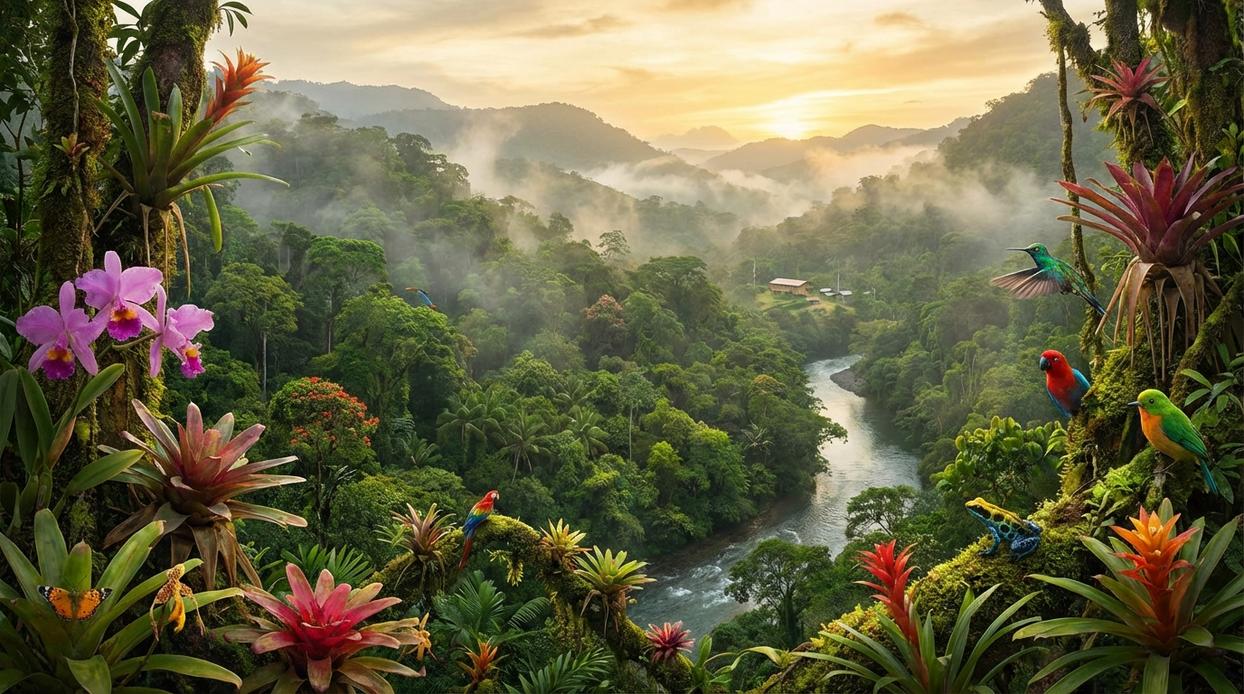
What does that actually look like on the ground? Millions of insect species (yes, millions), kaleidoscopic macaws slicing across the canopy, stealthy jaguars moving like jungle ghosts, and capybaras lounging by riverbanks like oversized, unbothered house pets. Poison dart frogs—tiny, neon, almost unreal—flash warnings in the understory. I’ve always felt that nowhere else makes you feel smaller in the best possible way.
Some argue biodiversity is overrated compared to dramatic deserts or alpine peaks. I disagree. Diversity is drama—just layered, humid, and humming.
Destination Plan – Ecuador’s Yasuní National Park
If you want record-breaking richness without bushwhacking into oblivion, Yasuní National Park is your move. Studies show it holds world records for amphibian, tree, and insect diversity per hectare (National Geographic). It’s accessible by guided river journeys, yet feels primal.
On-the-Go Packing Tip: Bring lightweight, quick-dry clothing (you’ll thank yourself by hour two), potent DEET-based insect repellent, and reliable waterproof binoculars for canopy wildlife. Pro tip: humidity ruins cheap optics fast.
And if you’re comparing ecosystems, it pairs surprisingly well with ideas from desert adventures planning trips to arid landscapes—contrast sharpens appreciation.
I still remember the first time I saw the rainforest canopy in Borneo ripple at dawn—then an orangutan emerged, slow and deliberate, like a red-haired philosopher considering breakfast. That moment clarified what makes Southeast Asia’s islands so extraordinary.
Sundaland (a submerged continental shelf that once connected Borneo and Sumatra to mainland Asia) and the Philippines are classic archipelagos—chains of islands that act like evolutionary laboratories. Because species become isolated, they evolve into entirely new forms. Scientists call this endemism, meaning plants and animals found nowhere else on Earth. It’s why these islands rank among the world’s global biodiversity hotspots (regions with exceptional species richness under threat).
Take the proboscis monkey in Borneo, famous for its comically large nose (yes, it’s even more dramatic in person), or the critically endangered Philippine eagle, one of the largest eagles on Earth (I heard its call long before I saw it slicing through the canopy).
Then again, some travelers argue these places are too remote or rugged. Fair point—the humidity is relentless. However, pairing a jungle trek with a visit to an Iban longhouse in Sarawak adds context: the forest isn’t just habitat; it’s home.
Travel hack: book certified eco-lodges and conservation-backed guides—your stay directly funds habitat protection (pro tip: always ask where your park fees go).
Africa’s Unique Worlds: Madagascar and the Eastern Afromontane
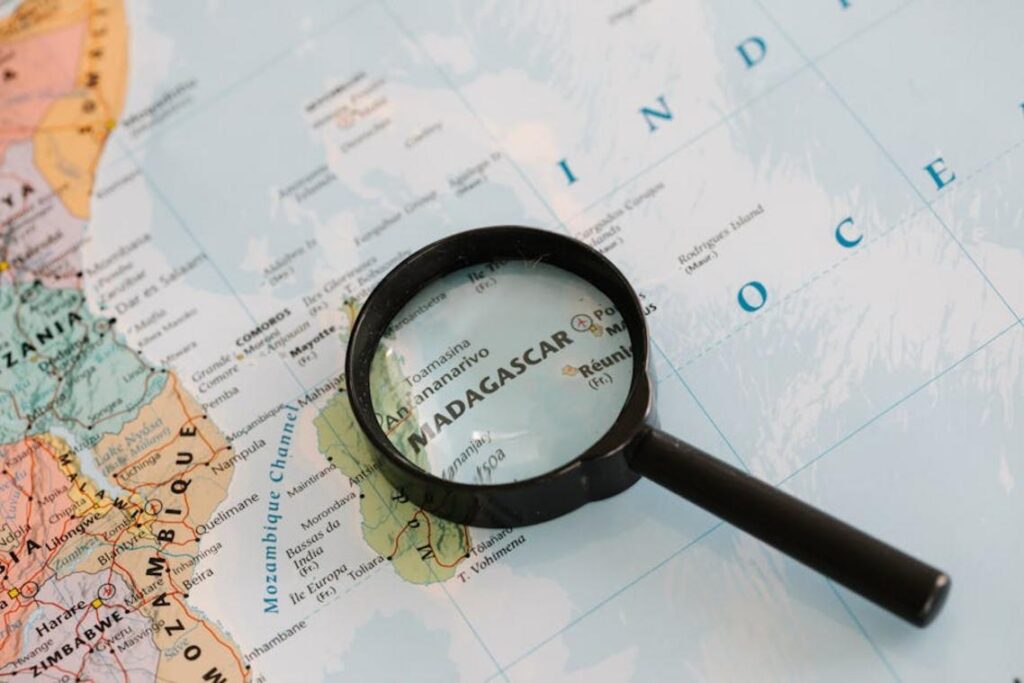
Madagascar feels like evolution’s secret workshop—a living laboratory sealed off from the mainland for 88 million years (Britannica). Isolation works like a locked greenhouse: species grow in wildly original directions. Over 90% of its wildlife exists nowhere else on Earth (WWF), making it one of the planet’s global biodiversity hotspots.
Madagascar’s Stars
Think of lemurs as nature’s experimental prototypes—wide-eyed, acrobatic, and wonderfully diverse. More than 100 species leap through its forests (IUCN). Chameleons flash colors like mood rings with legs, while baobab trees rise from the خاک like upside-down umbrellas, roots reaching skyward (they look like they were sketched by Dr. Seuss).
Some argue Madagascar gets all the spotlight. Fair. But Africa’s mountains guard quieter marvels.
The Mountain Sanctuaries
The Eastern Afromontane region—stretching from Ethiopia to Zimbabwe—is like a string of emerald islands floating above the savannah. In the Virunga Mountains, endangered mountain gorillas survive in mist-wrapped forests (WWF). Their habitat is fragile, like fine china balanced on a cliff edge.
Destination Plan
- Multi-day gorilla trek in Rwanda or Uganda
- Small groups, guided hikes, strict conservation rules
It’s not just tourism—it’s a conservation handshake. Permit fees directly fund protection (pro tip: book months ahead; slots vanish fast). Watching a silverback up close? Life-changing.
Your roadmap to Earth’s most life-rich regions is now in hand. This guide mapped clear routes into global biodiversity hotspots, turning big dreams into doable plans. More importantly, it showed that these journeys are about connection, not checklists (no safari selfies required).
So, start here:
- Choose one region and research seasonal wildlife patterns.
- Review entry permits, local guides, and conservation rules.
- Build a flexible itinerary with buffer days for weather.
Next, compare flight paths and eco-lodges, then set a budget. For example, travelers exploring the Amazon’s waterways often book small-group river tours months ahead. Finally, commit to a departure date.
As we delve into the rich tapestry of life found in biodiversity hotspots around the globe, it’s fascinating to consider how these unique ecosystems, much like the stunning climbing routes in Hausizius, offer adventures both for the spirit of exploration and the preservation of nature’s treasures – for more details, check out our Where To Climb In Hausizius.
Your Next Adventure Starts Here
You came here looking for clarity on how to explore the world’s most extraordinary ecosystems with purpose and confidence. Now you understand why global biodiversity hotspots matter, how to experience them responsibly, and what it takes to prepare for a journey that’s both unforgettable and sustainable.
Traveling to fragile, species-rich regions can feel overwhelming. Where do you go? What do you pack? How do you minimize your impact while maximizing the experience? Those uncertainties stop too many travelers from taking meaningful trips.
The truth is, with the right plan and smart travel strategies, you can explore these rare environments without the stress. Thoughtful preparation turns complicated logistics into seamless adventure.
Now it’s your move: choose one destination that excites you, map out a simple, responsible travel plan, and start preparing with proven packing and cultural trekking strategies. Thousands of modern explorers are already transforming the way they travel—more intentionally, more sustainably, and with greater impact.
Don’t let uncertainty keep you home. Start planning your biodiversity-focused journey today and experience the kind of travel that truly changes how you see the world.
 Chunanirala Johnson writes the kind of cultural trekking insights content that people actually send to each other. Not because it's flashy or controversial, but because it's the sort of thing where you read it and immediately think of three people who need to see it. Chunanirala has a talent for identifying the questions that a lot of people have but haven't quite figured out how to articulate yet — and then answering them properly.
They covers a lot of ground: Cultural Trekking Insights, Destination Plans and Discoveries, Hidden Gems, and plenty of adjacent territory that doesn't always get treated with the same seriousness. The consistency across all of it is a certain kind of respect for the reader. Chunanirala doesn't assume people are stupid, and they doesn't assume they know everything either. They writes for someone who is genuinely trying to figure something out — because that's usually who's actually reading. That assumption shapes everything from how they structures an explanation to how much background they includes before getting to the point.
Beyond the practical stuff, there's something in Chunanirala's writing that reflects a real investment in the subject — not performed enthusiasm, but the kind of sustained interest that produces insight over time. They has been paying attention to cultural trekking insights long enough that they notices things a more casual observer would miss. That depth shows up in the work in ways that are hard to fake.
Chunanirala Johnson writes the kind of cultural trekking insights content that people actually send to each other. Not because it's flashy or controversial, but because it's the sort of thing where you read it and immediately think of three people who need to see it. Chunanirala has a talent for identifying the questions that a lot of people have but haven't quite figured out how to articulate yet — and then answering them properly.
They covers a lot of ground: Cultural Trekking Insights, Destination Plans and Discoveries, Hidden Gems, and plenty of adjacent territory that doesn't always get treated with the same seriousness. The consistency across all of it is a certain kind of respect for the reader. Chunanirala doesn't assume people are stupid, and they doesn't assume they know everything either. They writes for someone who is genuinely trying to figure something out — because that's usually who's actually reading. That assumption shapes everything from how they structures an explanation to how much background they includes before getting to the point.
Beyond the practical stuff, there's something in Chunanirala's writing that reflects a real investment in the subject — not performed enthusiasm, but the kind of sustained interest that produces insight over time. They has been paying attention to cultural trekking insights long enough that they notices things a more casual observer would miss. That depth shows up in the work in ways that are hard to fake.