
Planning for months on the road is a different challenge than packing for a weekend escape. This guide is built specifically around long term backpacking essentials, cutting through the fluff to focus only on gear that earns its place in your pack. Overpacking leads to sore shoulders, wasted money, and constant frustration—so we prioritize durable, multi-functional, lightweight items that stand up to real-world travel. Every recommendation is shaped by thousands of miles of on-the-ground testing and hard lessons learned. If you’re looking for a practical, no-nonsense checklist for extended backpacking, you’ll find exactly what you need here.
The “Big Four”: Your On-the-Go Life Support System
When preparing for long-term backpacking, one of the key travel essentials is ensuring your tech gear is organized effectively, a skill that can be further honed by exploring our article on Organizing Tech Gear Efficiently While Traveling.
When you strip backpacking down to its core, what are you really carrying? Comfort—or survival? Your long term backpacking essentials start with four systems that quite literally keep you functioning.
The Backpack: Your Mobile Basecamp
First things first: does your pack actually fit your torso length? If not, no amount of fancy features will save your shoulders (sound familiar?). For extended trips, a 50–65 liter pack balances capacity and comfort. Look for:
- Load lifters to pull weight closer to your center of gravity
- A structured, padded hip belt to transfer weight off your shoulders
- Durable fabrics like Dyneema (ultralight, abrasion-resistant composite fiber) or Cordura (rugged nylon known for durability)
Some argue ultralight packs are the only way to go. But for long hauls, durability often beats shaving a few ounces.
The Shelter System: Weather Is Not a Suggestion
Freestanding tent or trekking pole tent? Freestanding models are easier on rocky ground, while trekking pole tents save weight. However, are you prepared to baby ultralight fabric for months? Seam sealing (waterproofing stitched seams) and a proper ground sheet are non-negotiable for longevity.
The Sleep System: Recovery Is Everything
Have you ever wondered why a “40°F bag” still leaves you cold? Temperature ratings reflect survival, not comfort (REI Expert Advice). Choose insulation for the coldest stretch of your trip. Pair it with a pad boasting an adequate R-value—a measure of thermal resistance (ASTM F3340 standard). A closed-cell foam pad adds durability and backup security.
The Cook System: Fueling the Engine
Canister stoves win for convenience. Liquid fuel stoves thrive in remote, cold conditions. A titanium or aluminum pot plus a long-handled spoon? That’s all you need (yes, really).
Your All-Condition Wardrobe: The Art of Layering
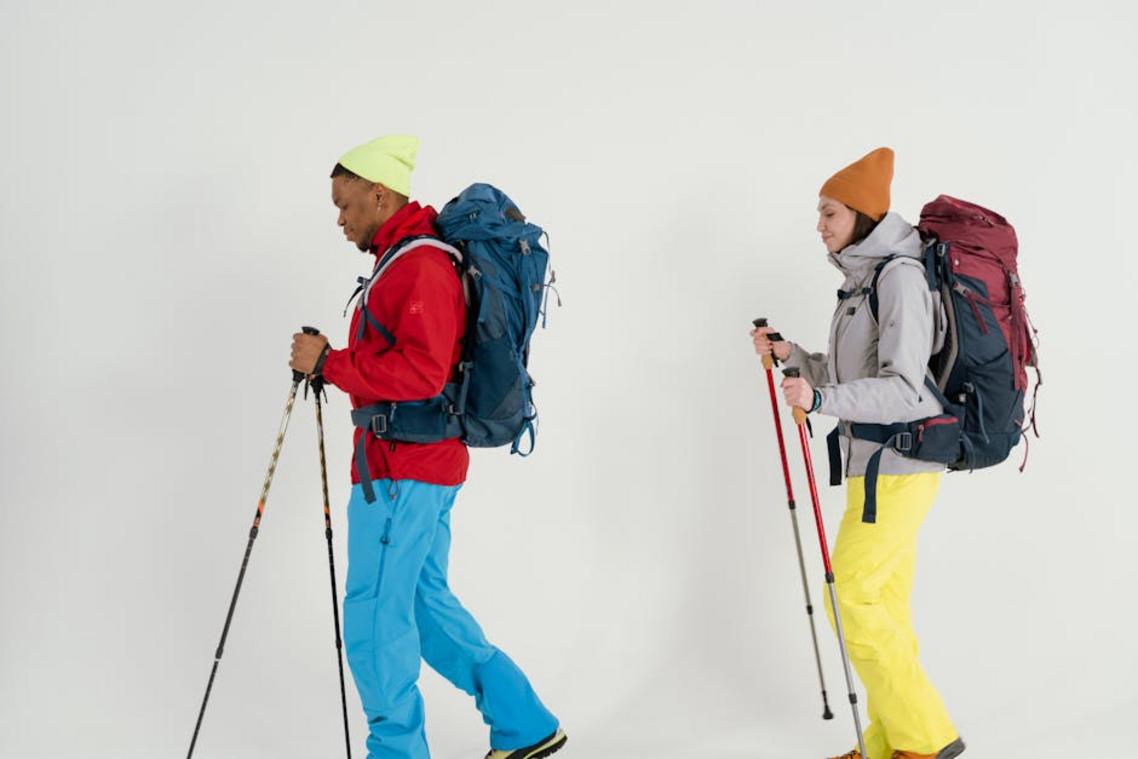
Layering sounds technical, but it’s simply the practice of wearing multiple lightweight pieces instead of one bulky coat. Each layer has a job. When combined, they regulate temperature, manage moisture, and protect you from the elements (think of it as building your own personal climate control system).
First, the base layer is your “second skin.” This is the fabric that sits directly against your body. Avoid cotton because it absorbs sweat and dries slowly, which can make you cold fast. Instead, choose merino wool or synthetic materials that wick moisture—meaning they pull sweat away from your skin so it can evaporate. One merino wool top and bottom set is enough for sleeping and cold days.
Next comes the mid-layer, which provides insulation. Insulation simply means trapping body heat. A fleece jacket works well because it’s breathable during movement but warm when you stop.
Finally, the outer shell shields you from rain and wind. “Waterproof” keeps rain out; “breathable” lets sweat escape. You need both.
Footwear matters most. Broken-in waterproof boots or trail runners prevent blisters, while rotating three pairs of merino socks ensures dry feet—critical for morale and safety.
Mastering this system is key to long term backpacking essentials.
Health, Safety, and Navigation Essentials
On my third week of a backcountry trek, I learned the hard way that “basic” isn’t always enough. A small heel blister turned into a limping disaster because I skimped on moleskin. Since then, my first-aid kit has been NON-NEGOTIABLE.
Start with a pre-made kit, then customize it. Add:
- Extra blister care (moleskin, medical tape)
- Pain relievers
- Personal medications for the full trip duration (plus a few extra days)
Blister treatment matters because friction injuries—skin damage caused by repeated rubbing—are one of the most common hiking ailments (American Academy of Dermatology). Pro tip: pre-tape hot spots before they become blisters.
Water treatment is about REDUNDANCY. Carry a primary filter like a Sawyer Squeeze or Katadyn BeFree, plus chemical purification tablets as backup. Filters can freeze and crack internally (CDC warns freezing can compromise filtration). Tablets are slower, but they work when gear fails.
For navigation, don’t rely solely on your phone. Batteries die. Screens crack. Bring a physical map and compass—and know how to use them. A GPS device or satellite messenger (like a Garmin inReach) can be life-saving in remote areas.
Hygiene? Keep it simple:
- Biodegradable soap
- Toothbrush and toothpaste
- Quick-dry towel
Smart packing of gadgets matters too—see organizing tech gear efficiently while traveling.
These are long term backpacking essentials that keep small problems from becoming trip-ending emergencies.
Tech, Tools, and Indispensable Extras
When you’re living out of a pack, small gear choices make a big difference.
Power & Light: Bring a reliable headlamp with a red-light mode (it preserves night vision and won’t blind your tent mate at 2 a.m.). Pair it with a 10,000–20,000 mAh power bank. Step-by-step: charge everything in town, switch devices to airplane mode on trail, and top off your phone each night to avoid deep battery drain.
The Repair Kit: Things will break—usually at the worst time. Wrap duct tape around your water bottle for easy access. Pack Tenacious Tape for gear rips, a compact multi-tool for quick fixes, and extra cordage for improvised clotheslines or shelter tie-outs.
Documentation: Keep physical copies of ID and permits in a waterproof bag. Store encrypted digital backups on your phone and in cloud storage.
Small but Mighty Items: A whistle, lighter plus stormproof matches, and sunglasses with sunscreen round out your long term backpacking essentials.
Ready to Pack Smarter and Travel Farther
You started this guide looking for clarity on what truly matters when preparing for extended travel. Now you know how to choose gear that lasts, pack efficiently, and avoid the common mistakes that weigh travelers down—literally and mentally.
The biggest pain point with long trips isn’t the distance. It’s overpacking, underpreparing, and realizing too late that you brought the wrong things. When you focus on long term backpacking essentials, you eliminate stress, save space, and move through every destination with confidence.
Your next step is simple: review your current packing list, remove what doesn’t serve you, and build around proven essentials that support mobility, comfort, and adaptability. Don’t wait until you’re repacking on a hostel floor to fix preventable mistakes.
Thousands of modern travelers are simplifying their journeys with smarter packing strategies and field-tested gear choices. Join them. Start refining your backpack today and travel lighter, longer, and with total peace of mind.
 Chunanirala Johnson writes the kind of cultural trekking insights content that people actually send to each other. Not because it's flashy or controversial, but because it's the sort of thing where you read it and immediately think of three people who need to see it. Chunanirala has a talent for identifying the questions that a lot of people have but haven't quite figured out how to articulate yet — and then answering them properly.
They covers a lot of ground: Cultural Trekking Insights, Destination Plans and Discoveries, Hidden Gems, and plenty of adjacent territory that doesn't always get treated with the same seriousness. The consistency across all of it is a certain kind of respect for the reader. Chunanirala doesn't assume people are stupid, and they doesn't assume they know everything either. They writes for someone who is genuinely trying to figure something out — because that's usually who's actually reading. That assumption shapes everything from how they structures an explanation to how much background they includes before getting to the point.
Beyond the practical stuff, there's something in Chunanirala's writing that reflects a real investment in the subject — not performed enthusiasm, but the kind of sustained interest that produces insight over time. They has been paying attention to cultural trekking insights long enough that they notices things a more casual observer would miss. That depth shows up in the work in ways that are hard to fake.
Chunanirala Johnson writes the kind of cultural trekking insights content that people actually send to each other. Not because it's flashy or controversial, but because it's the sort of thing where you read it and immediately think of three people who need to see it. Chunanirala has a talent for identifying the questions that a lot of people have but haven't quite figured out how to articulate yet — and then answering them properly.
They covers a lot of ground: Cultural Trekking Insights, Destination Plans and Discoveries, Hidden Gems, and plenty of adjacent territory that doesn't always get treated with the same seriousness. The consistency across all of it is a certain kind of respect for the reader. Chunanirala doesn't assume people are stupid, and they doesn't assume they know everything either. They writes for someone who is genuinely trying to figure something out — because that's usually who's actually reading. That assumption shapes everything from how they structures an explanation to how much background they includes before getting to the point.
Beyond the practical stuff, there's something in Chunanirala's writing that reflects a real investment in the subject — not performed enthusiasm, but the kind of sustained interest that produces insight over time. They has been paying attention to cultural trekking insights long enough that they notices things a more casual observer would miss. That depth shows up in the work in ways that are hard to fake.