
Planning a meaningful trip today takes more than booking flights and saving a few attractions on your map. Travelers are searching for smarter ways to explore—practical hacks that simplify logistics, destination insights that go beyond tourist hotspots, and cultural guidance that helps them connect more deeply with the places they visit. This article is designed to meet that need.
Inside, you’ll find carefully curated destination plans, efficient packing strategies for life on the move, and cultural trekking insights that help you experience each location with confidence and respect. We focus on real-world travel challenges—tight schedules, limited budgets, overpacked bags—and offer solutions that are tested, practical, and easy to apply.
Our approach blends hands-on experience with travel visual storytelling, helping you not only plan your journey but truly envision it. Whether you’re preparing for your first adventure or refining your travel style, this guide equips you with clear, actionable advice to make every step of the journey smoother and more memorable.
Most travel photos sit in cloud folders, technically sharp but emotionally flat. The difference between a snapshot and a story is intention. Start with a simple framework:
- Plan a narrative arc—arrival, conflict, discovery, reflection.
- Capture details that anchor place: market hands, train tickets, street sounds.
- Edit for mood, not perfection.
This is travel visual storytelling in action. Use sequences instead of single hero shots, and pair images with short, sensory captions. Some argue gear matters more; yet even a phone can craft connection when moments are intentional. Pro tip: end with a reflective frame that echoes your opening shot beautifully.
Think Like a Storyteller, Not Just a Photographer
Before you even lift your camera, pause. Define the core theme of your trip. Is this journey about adventure, relaxation, cultural immersion, or culinary exploration? A theme is the central idea that ties everything together (like the plot of your favorite movie). Without it, your photos become random snapshots. With it, they become a narrative. So choose one clear focus and let it guide what you shoot.
Next, structure your trip like a three-act story. The beginning captures anticipation—packing, airport scenes, that first glimpse of a new skyline. The middle holds the core experience: discoveries, small mishaps, conversations, unexpected rainstorms. The end is reflection—the quiet train ride home or the last sunset. This simple framework keeps your travel visual storytelling cohesive.
Just as importantly, focus on emotion, not just landmarks. Anyone can photograph a monument. Instead, capture laughter in a night market or your own windblown awe on a cliffside.
To stay intentional, create a simple shot list:
- Morning coffee at a local café
- Haggling at the market
- Sunset over the mountains
Finally, be present. The best stories aren’t forced—they’re noticed.
The Wanderer’s Toolkit: Gear and Techniques for Impact
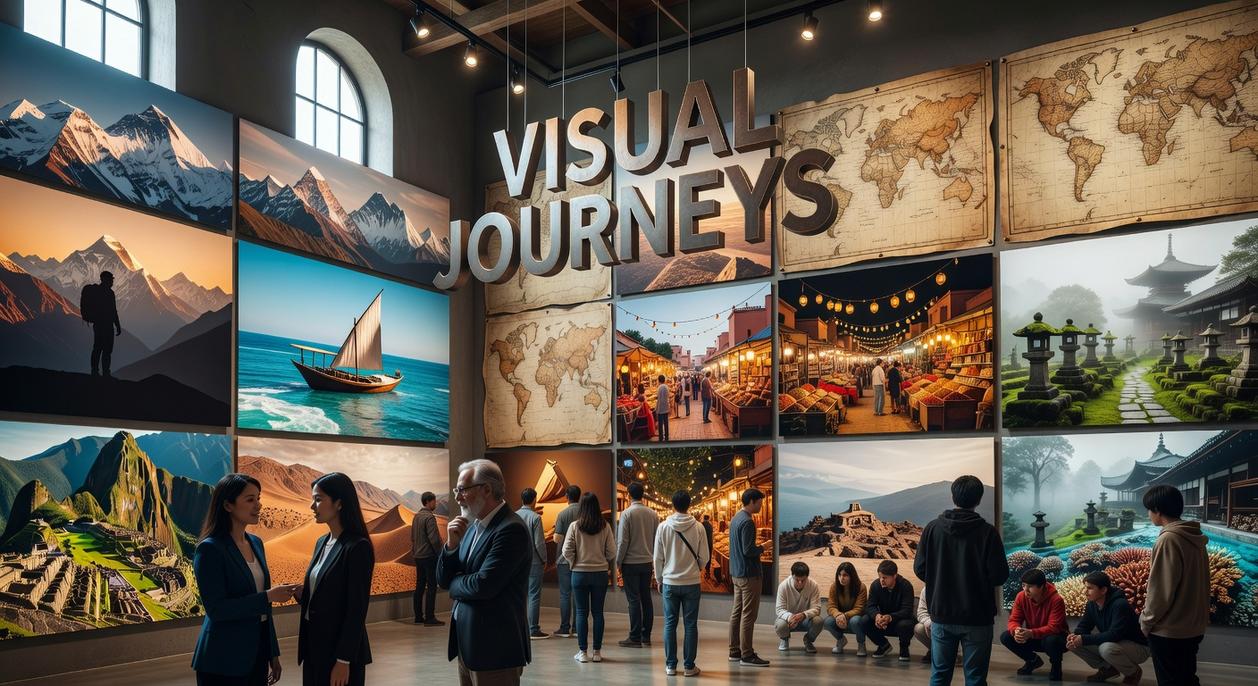
Back in 2019, travel creators lugged DSLRs the size of small bricks across continents. Today, after years of real-world testing, one truth stands: your smartphone is often your most powerful storytelling tool. It’s discreet, always in your pocket, and capable of shooting 4K video. Add a compact tripod for stability and an external microphone for clean audio, and you’ve built a minimalist kit with maximum impact. (Pro tip: a $20 lapel mic can elevate your videos instantly.)
Mastering Composition
Great visuals aren’t accidents. The Rule of Thirds—placing your subject along imaginary gridlines—creates balance. Imagine a camel caravan crossing the Sahara, positioned off-center against a vast sky. Leading lines, like winding rivers or cobblestone paths, guide the viewer’s eye naturally through the frame. Framing—shooting through a market archway or train window—adds depth and context. Think of it as travel visual storytelling in motion.
Vary Your Shots
Dynamic stories mix perspectives:
- Wide shots establish the scene (a sweeping Himalayan valley).
- Medium shots show action (a vendor preparing street food).
- Close-ups capture emotion (wrinkled hands weaving textiles).
Relying on one angle flattens your narrative. Mixing them builds rhythm, much like a well-edited film.
Harnessing Light
The “Golden Hour” (shortly after sunrise or before sunset) bathes landscapes in soft, warm tones. Midday sun, however, can be harsh. Counter it by seeking shade, stepping indoors, or focusing on textured details. Even harsh light, used intentionally, can tell a powerful story (just ask any noir filmmaker).
Crafting the Narrative: Editing and Sequencing Your Visuals
The Culling Process
After a week on the road, you might have 600 photos of one sunset (we’ve all been there). The trick is finding the “hero” shot—the single image that captures the mood, light, and emotion of that moment. A hero shot is the strongest visual that carries your story forward. Some argue you should post everything for “authenticity.” I disagree. Less is more isn’t elitist; it’s respectful of your audience’s attention. Think of it like a movie trailer: only the best scenes make the cut.
Develop a Consistent Style
Consistency builds recognition. Whether you prefer vibrant colors or moody shadows, tools like Lightroom Mobile or VSCO help you apply similar tones across images. Critics say presets make feeds look generic. True—if overused. Pro tip: tweak exposure and temperature slightly per photo to keep it natural.
The Power of Sequencing
Great travel visual storytelling depends on order. In an Instagram carousel, start wide (establishing shot), move closer (details), then end with a human moment. The same flow works in blogs and reels.
Adding Motion
Short clips—hyperlapses in cities or slow-motion waves—add life. Explore how digital nomads design a location independent lifestyle (https://cawuhao.com/how-digital-nomads-design-a-location-independent-lifestyle/) to see narrative flow in action.
Sharing your journey: captions and platforms that connect isn’t about writing “take me back.” It’s about context. Writing captions that add value starts with the What, Where, Why formula: what you’re seeing, where you are, why it mattered. Instead of “best sunset ever,” try a mini-story about the fisherman who taught you patience, or the surprising spice rule at a local market. (Details beat drama.) End with a question to spark conversation: Have you ever been here? What’s the most amazing market you’ve visited?
Now the contrarian take: Instagram isn’t always king. It’s visual-first and quick, yes, but depth suffers. TikTok and Reels reward trends and energy, yet nuance can vanish in fifteen seconds. A personal blog feels old-school, but it’s where connection grows through layered reflection.
Use travel visual storytelling intentionally, not performatively. Pro tip: draft captions offline to refine clarity. Depth over dopamine wins long-term. Choose platforms strategically.
Your next adventure is more than a weekend escape; it’s raw material for something meaningful. With a simple framework, you move beyond random snapshots and step into travel visual storytelling with intention. That means fewer forgotten photo dumps and more moments that actually resonate.
When you shape your trip around a core theme, you give your audience context, emotion, and momentum. A beginning that sets the scene. A middle filled with texture. An ending that lingers. (Think less slideshow, more indie film.)
The benefit? Deeper engagement, stronger memories, and stories you’ll revisit long after you’ve unpacked. Start small, see difference.
You set out looking for smarter ways to explore, plan, and experience the world with confidence. Now you have practical wanderer highlights, cultural trekking insights, destination strategies, and packing hacks designed to make every journey smoother and more meaningful.
Travel can feel overwhelming—too many choices, too little time, and the fear of missing out on what truly matters. With the right approach and travel visual storytelling, you’re no longer just visiting places—you’re experiencing them with clarity and purpose.
Ready for Your Next Adventure?
Don’t let confusion or poor planning hold back your next trip. Get proven travel concepts, on-the-go packing tips, and destination plans trusted by a growing community of modern explorers. Start planning smarter today—explore more guides, apply these strategies, and turn your next journey into a seamless, unforgettable experience.